What is API Monetization? The Complete Guide (2026)
Your APIs work. Partners are using them. Traffic is growing. And somewhere in a quarterly business review, someone asked the question that's been haunting your team ever since:
"Why aren't we charging for this?"
It's a fair question. Your APIs generate real value for the companies that build on them. But most API programs are run as a cost center: your team maintains 500 integrations, handles onboarding, manages credentials, and eats the infrastructure bill. Partners get the value. Your business gets the tab.
API monetization changes that. This guide explains what it is, why it matters in 2026, which pricing models work, and how to get started without a six-month engineering project.
What is API Monetization?
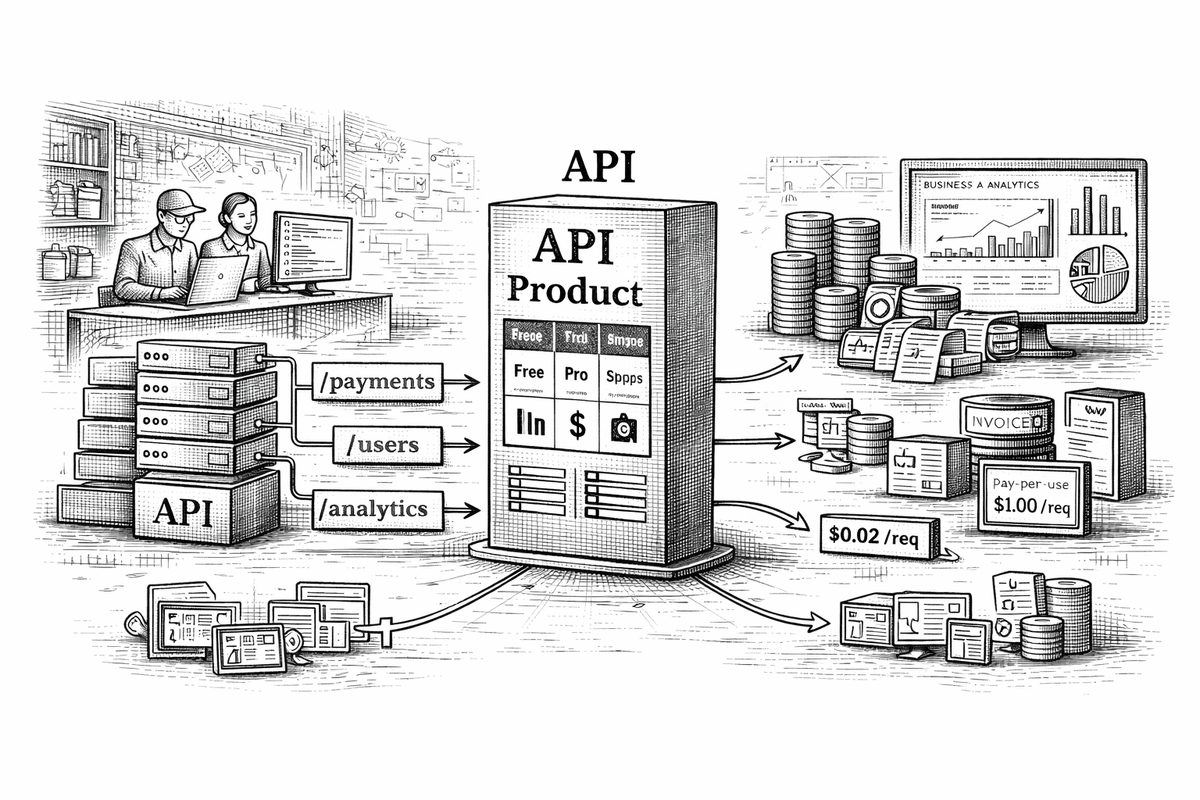
API monetization is the practice of generating revenue from API access. You set a price for using your API, partners or developers pay for it, and your API program becomes a business asset instead of a cost center.
That's the simple version. In practice, it means packaging your APIs into products, choosing the right pricing model, automating billing, and giving partners a self-service way to subscribe. Done well, it turns your API program from infrastructure into income.
Why API Monetization Matters in 2026
In 2026, API programs that can't generate revenue are losing budget. The shift from cost center to profit center is the most important transition happening in API programs right now.
For years, APIs were treated as a technical feature. You built them, partners used them, and the business justified the investment through indirect benefits: better integrations, stronger partnerships, longer customer retention. Revenue from API access itself was rare.
That model is breaking down. Partners now expect self-service. They compare your onboarding experience to Stripe and Twilio, not to other companies in your industry. They want to subscribe, get credentials, and ship. If your process takes weeks and requires engineering tickets, they'll find someone who moves faster.
At the same time, leadership is asking harder questions about ROI. "Which partners are driving value?" is becoming "Which partners are paying?" The teams that can answer both questions are getting budget. The teams that can't are getting cut.
API monetization is how you answer both.
The companies doing it right aren't just capturing revenue. They're building partner programs that leadership points to in board meetings. Self-service onboarding, usage-based billing, and real visibility into which relationships generate the most value.
That's the shift. And it's not coming. It's here.
API Monetization Models Explained
API pricing models fall into four categories: postpaid, prepaid, contract-based, and free. Most mature API programs use more than one. The right model depends on your product, your partners, and the level of trust in the relationship.
The key decision is whether partners pay before or after they use your API. That choice affects cash flow, conversion rates, and risk.
Postpaid models (pay after usage)
Postpaid models bill partners after they consume your API. They are easy for partners to understand and lower the barrier to getting started. The trade-off is risk: you deliver value before you get paid.
Volume pricing. A single per-unit price applies to the partner's total usage for the billing period. The more they use, the lower the per-unit cost. Good when you want to reward high-volume partners and compete on price at scale.
Graduated pricing. Different per-unit prices apply to different usage tiers. The first 10,000 calls cost one rate, the next 50,000 cost less, and so on. This is the most common model for usage-based API programs. It mirrors how Stripe and Twilio price their APIs. Partners can start small and grow into higher tiers without renegotiating contracts.
Postpaid works best with trusted relationships. There is always a risk of non-payment, so it is most appropriate for established partners or where you have other commercial leverage.
Prepaid models (pay before usage)
Prepaid models collect payment upfront. They eliminate the risk of non-payment and give you revenue before usage. The trade-off is that requiring upfront payment can slow down conversion.
Flat-rate pricing. Partners pay a fixed monthly or annual fee that includes a usage quota. This is the simplest model to implement. No usage metering configuration, no complex billing logic. Set the price, set the quota, and you are done. The downside is you leave money on the table when partners exceed what a flat fee covers.
Flat-rate plus overage pricing. Partners pay a base fee that includes a set number of API calls. Usage above that threshold is billed per unit. This is the middle ground: predictable cost for most partners, with upside revenue from heavy users. Often the best starting point for teams new to API monetization.
Credit-based burndown. Partners buy a pack of credits upfront and spend them down as they use your API. Credits map to API calls, data processed, or another unit of value. This model is increasingly relevant as AI agents become API consumers. When an AI agent calls your API on behalf of a user, credit burndown gives both sides clear spend visibility. This is not a future scenario. AI agents consuming APIs through protocols like MCP is happening now, and credit-based pricing is a natural fit.
Use prepaid models when trust levels are low or unestablished. They work well for new partner relationships, self-service signups, and any situation where you need payment certainty before delivering access.
Contract-based pricing
How it works: Pricing is negotiated directly with strategic partners based on their specific usage, requirements, or relationship tier.
When to use it: For large enterprise partners where a standard pricing page is not appropriate. You negotiate terms, set usage commitments, and formalize the relationship with a contract. Use this when you have an existing contractual relationship and the value is captured through the broader deal. Works alongside other pricing models, not instead of them. The question to ask: are you leaving revenue on the table by not charging for API access within these contracts?
Free tier
How it works: Partners get API access at no cost, typically with lower rate limits and sandbox-only access.
When to use it: A free tier lowers the barrier to entry and lets partners prove value before committing budget. It works well as the entry point in a Good-Better-Best plan structure, where free gives way to paid tiers as usage grows. But free access needs guardrails. Enforce rate limits. Consider an approval process if you see abuse. Bad actors will find ways to circumvent rate limits if there is no friction at all.
API Monetization Examples
The most recognizable API monetization examples include Stripe's per-transaction model, Twilio's per-message pricing, and Google Maps Platform's usage-based tiers. The best way to understand the concept is to see how it works across different industries.
Payment APIs (Stripe, Braintree)
Stripe charges per transaction, typically a percentage plus a fixed fee per successful payment. Developers pay only when they generate revenue. The model aligns Stripe's income with their customers' success.
Communication APIs (Twilio)
Twilio charges per SMS sent, per minute of voice, per WhatsApp message. Pure pay-per-use. Developers can test for almost nothing, then scale up as their products grow. Twilio earns more as their customers earn more.
Weather and data APIs
Weather APIs typically use tiered pricing based on API calls per month. Free tiers exist for developers and hobbyists. Commercial users move to paid tiers with higher limits and better SLAs. Enterprise customers negotiate custom contracts.
Healthcare and HR platform APIs
Companies like HHAeXchange or Personify Health maintain hundreds of partner integrations. The shift happening in this category is exactly the cost-center-to-profit-center transition: rather than supporting 500 integrations at cost, platforms are starting to charge partners a subscription or usage fee to access their APIs. What was overhead becomes a revenue stream.
Mapping and geolocation APIs (Google Maps Platform)
Google charges per API call across its mapping products, with free monthly credits. High-volume commercial users pay based on usage. The model scales with the partner's application growth.
The common thread across all of these: the API delivers measurable value, and pricing reflects that value.
Why Paid Pricing Is Good for API Consumers
Charging for API access does not just benefit you. It protects the partners who depend on your APIs.
Free APIs get shut down. LinkedIn restricted its API. Reddit closed free access and broke thousands of applications overnight. Swisscom's IP2PLZ service disappeared. When an API has no revenue model, it is always one budget review away from being killed.
A paid API is harder for the corporate antibodies to switch off. Revenue creates internal champions. It justifies continued investment in uptime, documentation, and support. It turns your API from a side project into a business line that someone is accountable for.
For partners, paid access comes with expectations they actually want: SLAs, guaranteed uptime, quality documentation, and a team that answers when something breaks. Free APIs offer none of that. Partners building real products on your API would rather pay for reliability than get free access that might vanish.
The pitch to partners is not "we are going to start charging you." It is "we are going to give you something worth paying for: guaranteed access, better support, and the confidence that this API will still exist next year."
Common API Monetization Mistakes
The most common API monetization mistakes are skipping self-service onboarding, using one-size-fits-all pricing, ignoring usage visibility, and treating billing as an afterthought. Most API programs don't fail to monetize because the idea is wrong. They fail because of how they implement it.
1. No self-service onboarding
If partners have to email your team to get API access, request a pricing call, or wait for someone to provision their credentials, you've already lost. Partners expect the Stripe experience: sign up, subscribe, get a key, start building. Every manual step in your onboarding process is a conversion you lose.
2. One-size-fits-all pricing
A startup building a side project and an enterprise integrating your API into their core platform shouldn't pay the same way. Forcing every partner into one pricing model means your pricing works for nobody. Offer tiered plans, usage-based options, and contract terms for strategic partners.
3. No visibility into usage
You can't optimize what you can't measure. If your business team can't see which partners are using your APIs, how much they're generating, or which ones are growing, you're making pricing and partnership decisions based on gut feel. Visibility is not a nice-to-have. It's how you prove the program's value to leadership and decide where to invest.
4. Treating monetization as a side project
This is the most common mistake. The team sets up basic billing in a weekend, partners get access, and nobody touches the pricing model for two years. API monetization requires ongoing attention: testing pricing, adjusting tiers, reviewing which models are working, and responding to what partners actually value. Treat it like a product, not an infrastructure task.
5. Manual billing
Spreadsheet invoicing and manual Stripe exports don't scale past a handful of partners. When billing is manual, errors creep in, disputes happen, and your team spends time chasing invoices instead of growing the program. Automated billing isn't a luxury. It's the foundation that makes monetization sustainable.
How to Get Started with API Monetization
To start monetizing your APIs, define your API products, choose a pricing model, set up self-service partner onboarding, automate billing, and measure results. You don't need a six-month project. Here's how.
Step 1: Define what you're selling
Start by packaging your APIs into products. A product is a set of API endpoints, a usage limit, a price, and a set of terms. Don't try to monetize every endpoint at once. Pick the two or three that deliver the most clear value to partners and build your first product around those.
Step 2: Choose your pricing model
Look at how partners use your API today. Is usage clustered around a few heavy users, or spread evenly? Is the value they get proportional to how many calls they make, or is it consistent regardless of usage? Use that to pick a starting model. Graduated tiered pricing is a safe default for most API programs. You can always add models later.
Step 3: Set up self-service partner onboarding
Partners need to be able to sign up, choose a plan, subscribe, and get credentials without talking to your team. This means a developer portal, a product catalog, and automated provisioning. If you're building this yourself, expect it to take months. Platforms like Apiable can get you live in weeks.
Step 4: Connect billing automation
Your pricing model is only as good as the system collecting the money. Connect your API to a billing system that tracks usage, generates invoices, and handles subscriptions automatically. Stripe is the standard choice for payments. The harder part is the layer that translates API usage into billable events. That's what API monetization platforms handle.
Step 5: Measure and iterate
Once you're live, track what matters: which plans partners choose, where they churn, which endpoints drive the most usage, and how revenue grows over time. Use that data to adjust pricing, add tiers, or create new products. The first version of your pricing is a hypothesis. The real work is refining it.
Key Takeaways
- API monetization turns API access into revenue by attaching pricing to usage, subscriptions, or contracts.
- The shift from cost center to profit center is the defining move for API programs in 2026.
- Pricing models fall into four categories: postpaid (volume, graduated), prepaid (flat-rate, flat-rate plus overage, credit burndown), contract-based, and free. Most mature programs use more than one.
- The postpaid vs prepaid decision comes down to trust. Postpaid works with established partners. Prepaid works when trust is low or unestablished.
- Credit-based burndown is increasingly relevant as AI agents become API consumers through protocols like MCP.
- Paid pricing protects consumers too. Free APIs get shut down. Paid APIs get SLAs, investment, and longevity.
- The most common mistakes are manual onboarding, one-size-fits-all pricing, no usage visibility, and treating billing as an afterthought.
- You can get started without a big project. Define your products, pick a pricing model, set up self-service onboarding, automate billing, and iterate from there.
Ready to Monetize Your APIs?
If your APIs are doing the work, you should be getting paid for it.
Apiable gives you the pricing models, billing automation, partner onboarding, and usage visibility you need to turn your API program into a revenue source. No big project required. Most teams are live in weeks.
See how API monetization works with Apiable
Or compare your options first: See the best API monetization platforms for 2026
Ready to talk through your specific situation? Book a demo and we'll show you exactly how it works for a program like yours.
See how it fits your budget: View pricing