API Integration Best Practices for Partner Programs
Every new partner integration costs engineering time. The best API programs make that cost approach zero.
That's not a fantasy. It's what happens when you stop treating API integration as a one-off project and start treating it as a repeatable, self-service product.
Right now, most partner teams are stuck in a loop: a partner wants to integrate, someone raises a ticket, a developer gets pulled off their actual work, and six weeks later the partner is live. Maybe. Multiply that by 50, 100, or 500 partners, and you can see why scaling feels impossible.
This guide covers the API integration best practices that break that loop. Whether you're building your first partner program or trying to fix one that's already straining under its own weight, these practices will help you get partners live faster, with less effort from your team.
What Is API Integration?
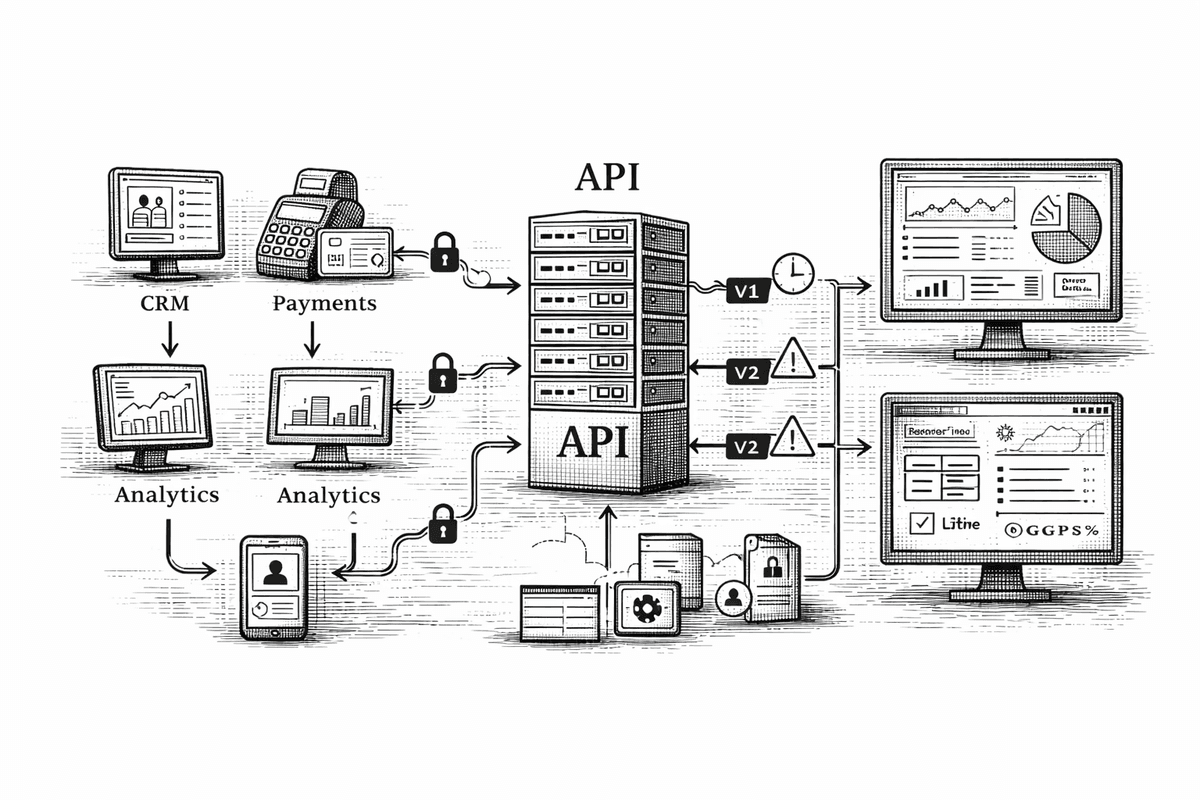
API integration is the process of connecting two software systems using APIs so they can exchange data and functionality automatically. In the context of partner programs, it means giving your technology partners access to your platform's capabilities without custom, one-off development work on either side.
A well-designed partner API integration lets a third party connect to your platform, authenticate, explore your endpoints, test in a sandbox, and go live. All without your team needing to hold their hand through every step.
Why API Integration Matters for Partner Programs
API integration strategy is the backbone of any scalable partner program. When it works well, partners get to value faster, your engineering team stays focused on product work, and your program can grow without adding headcount.
Here is what good third-party API integration delivers in practice:
Speed to market. Partners that can self-serve their integration go live in days instead of weeks. That matters when a partner's business case depends on how quickly they can ship.
Reduced engineering load. Every hour your developers spend hand-holding a partner through authentication is an hour they're not spending on your product. Self-service API integration gives that time back.
Partner satisfaction. Developers have a Stripe and Twilio standard in their heads. If your integration experience falls short, partners notice. And they tell other potential partners.
Scalability. Manual onboarding breaks at scale. One team quoted in Apiable's research had "500 to 700 products using our API" where "each integration is effectively one-off." That is not a partner program. That is a support queue with a branding problem.
A strong API integration strategy solves all four of these at once.
10 API Integration Best Practices
The following practices apply to any partner API integration program, regardless of your API gateway or identity provider.
1. Design for self-service from day one
Self-service API integration means partners can discover, test, and activate your APIs without raising a support ticket. This is the single biggest lever for scaling a partner program. Build your integration experience assuming your team will not be in the room. If a partner needs to email you to get an API key, your program is not ready to scale. An API developer portal centralizes credentials, documentation, and sandbox access in one place. That removes your team from the critical path.
2. Provide interactive documentation (OpenAPI/Swagger)
Static PDF docs are a dead end. Partners need to be able to read the spec and immediately try a request. Interactive documentation built on OpenAPI (formerly Swagger) standards lets partners test endpoints directly from the browser, see real request and response shapes, and understand your API's behavior before they write a single line of code. Good API integration examples embedded in your docs cut time-to-first-call significantly.
3. Offer sandbox environments for testing
A sandbox is a safe, isolated environment where partners can develop and test their integration without touching production data. Without one, partners either test in your live environment (bad for everyone) or test nothing (bad for quality). A sandbox removes the fear of breaking things. It also removes the excuse for not testing. Provide one. Make it easy to access. Reset it on demand if you can.
4. Use standard authentication (OAuth 2.0, API keys)
Your authentication approach should not be a puzzle partners have to solve. OAuth 2.0 is the industry standard for delegated access. API keys work well for server-to-server integrations. Use one or both. Do not invent your own auth flow. Non-standard authentication is one of the most common reasons partner integrations stall. Developers know how OAuth 2.0 works. Make it easy for them to use what they already know.
5. Version your APIs properly
Breaking changes break partners. If you change your API without a versioning strategy, you are silently breaking integrations your partners have already shipped. Use a clear versioning scheme (v1, v2, etc.) in your URL paths. Maintain old versions for a documented deprecation period. Give partners advance notice before anything changes. This is basic API hygiene, but it is often skipped until the first partner calls to say their integration broke overnight.
6. Set clear rate limits and usage policies
Partners need to know the rules of the road before they build. That means documenting your rate limits, usage quotas, and acceptable use policies in a place they will actually find them. Not buried in a terms of service PDF. Unexpected rate limiting is one of the fastest ways to erode partner trust. Communicate limits clearly, surface them in error responses, and give partners dashboard visibility into their own consumption.
7. Build onboarding flows, not just docs
Documentation tells partners what your API can do. An onboarding flow guides them from sign-up to first successful API call. These are not the same thing. A good onboarding flow includes a structured registration process, credential generation, a quick-start guide, and ideally a checklist that shows partners where they are in the process. Think of it as a product, not a knowledge base. The Apiable API portal is built around this principle: it treats partner onboarding as a flow, not an afterthought.
8. Monitor integration health proactively
Do not wait for partners to tell you their integration is broken. By the time they do, they have probably already lost trust. Track API call success rates, error rates, and latency per partner. Set up alerts for unusual patterns. Know which partners are active, which are stalled, and which have gone quiet. This kind of visibility lets you reach out before a problem becomes a churn risk. It also gives your leadership team data to justify the program's value.
For more on building visibility into your partner program, see the guide to scaling technology partner programs.
9. Provide SDKs in popular languages
Not every partner developer wants to deal with raw HTTP requests. SDKs in popular languages (Python, JavaScript, Java, Go) lower the barrier to integration significantly. They handle authentication, request formatting, and error handling out of the box. You do not need SDKs in every language on day one. Start with the two or three languages your most common partners use, and build from there based on demand.
10. Measure time-to-first-call
Time-to-first-call (TTFC) is the single most useful metric for your partner integration experience. It measures how long it takes a new partner to make their first successful API call after signing up. A short TTFC means your onboarding is working. A long TTFC means something is getting in the way. Track it. Benchmark it. Optimize for it. If you can get a partner from sign-up to first successful API call in under an hour, you have built something worth being proud of.
Self-Service vs. White-Glove Integration
Not every partner is the same. Some are technical teams who want access to your sandbox and will be live within days. Others are business-led integrations where someone on your team needs to help define the use case before any code gets written.
Self-service API integration works best when:
- The partner has technical developers in-house
- The use case is well-defined and covered by your standard API
- You have interactive docs, a sandbox, and a clear onboarding flow in place
White-glove integration makes sense when:
- The partner is strategic and warrants dedicated attention
- The integration is complex or requires custom scoping
- The partner's team is not technical and needs help translating business requirements into API calls
The right approach for most partner programs is a hybrid model. Build a self-service track that handles 80% of your partners without your team touching them. Reserve your team's time for the 20% that genuinely need it.
The key insight: white-glove should be a choice, not a necessity. If you are forced into white-glove for every integration because your self-service experience is not good enough, you have a scalability problem. Not a partner management philosophy.
API Integration Checklist for Partner Programs
Use this as a pre-launch review for your partner API integration program.
Documentation
- OpenAPI/Swagger spec is current and accurate
- Interactive documentation is available (no static PDFs as primary source)
- API integration examples cover common use cases
- Rate limits and usage policies are documented and easy to find
- Error codes are documented with suggested resolution steps
Developer Experience
- Partners can self-register without contacting your team
- API keys or OAuth 2.0 credentials can be generated in the portal
- Sandbox environment is available and clearly separated from production
- SDKs are available in at least the two most common partner languages
- A quick-start guide exists and has been tested by someone unfamiliar with the API
Onboarding Flow
- Registration flow collects what you need (no more, no less)
- Approval flow is in place if access control is required
- Terms of service acceptance is tracked and stored
- Partners can see their onboarding status without emailing your team
Operations
- API versioning strategy is documented and enforced
- Time-to-first-call is being tracked
- Per-partner usage and error rates are monitored
- Alerts exist for unusual error spikes or drop in activity
- Deprecation notices go out with enough lead time for partners to adapt
Key Takeaways
- API integration in a partner program should be a product, not a project. Design it to scale without your team.
- The engineering bottleneck is the biggest obstacle to growing a partner program. Self-service integration removes it.
- Time-to-first-call is your most important integration health metric. Optimize for it relentlessly.
- Interactive docs, sandbox access, and standard authentication (OAuth 2.0, API keys) are table stakes, not differentiators.
- Build a self-service track for most partners. Reserve white-glove for strategic partners who genuinely need it.
- Monitor integration health proactively. Do not wait for partners to tell you something is broken.
- Version your APIs. Breaking a partner's integration overnight is one of the fastest ways to destroy trust.
Ready to Build a Partner API Program That Scales?
If you're managing partner integrations manually today, you already know what breaks down at scale: the tickets, the delays, the one-off builds that never quite become a standard.
Apiable gives you the infrastructure to run a self-service partner program without starting from scratch. Partners get a dedicated portal with credentials, docs, and sandbox access. Your team gets visibility into who's live, who's stalled, and who's driving revenue.
See how the Apiable API portal works or book a demo to talk through your partner program.